A safe, lawful start to daily carry begins with training, gear, and mindset.
If you want a clear, calm path to confidence, this concealed carry beginners guide is for you. I’ve helped new carriers build safe habits, avoid legal mistakes, and choose gear that fits real life. In the next few minutes, you will learn the steps that matter, backed by experience and sound research. Read on with an open mind and a steady heart.
Understand the basics and the law
Every state has its own rules, and they change. This concealed carry beginners guide starts with the law because safety and legality go together. Know if your state is permitless, shall-issue, or may-issue. Learn where guns are banned, how to notify police if required, and what counts as lawful self‑defense.
Use-of-force law focuses on reasonableness, imminence, and proportionality. That means you must face an immediate, serious threat and respond in a reasonable way. Deadly force is a last resort. Take a local legal class. Read your state statutes, not just blogs or forums.
Practical step: save your state code on your phone. Keep your permit and ID in a consistent pocket. If stopped by police, follow your state’s duty-to-notify rules, keep hands visible, and speak calmly.
Safety first: the four rules and everyday habits
Everything in this concealed carry beginners guide rests on safe handling. The four rules are simple and firm. Treat every gun as if loaded. Never point at anything you are not willing to destroy. Keep your finger off the trigger until your sights are on target and you have decided to shoot. Know your target and what is beyond.
Build daily habits. Do a safe press-check only when needed and in a safe direction. Use a holster that fully covers the trigger. Reholster slow and deliberate. Avoid off‑body carry unless you can control the bag at all times.
A quick story from coaching new carriers: a student chased comfort over safety with a soft holster. It collapsed during reholster and nearly caused a negligent discharge. A rigid holster fixed it. Small changes prevent big problems.

Choosing a concealed carry handgun
Gun choice is personal, but patterns help. This concealed carry beginners guide suggests a reliable, compact 9mm from a proven maker. Choose a size you can control with one hand. Controls should be simple. Sights should be easy to see. The trigger should be consistent.
What matters most is reliability. The gun must run through 200–300 rounds without a hiccup. Your grip should place the bore in line with your forearm. If the gun bites your hand or shifts in recoil, try another.
At the store, test the reach to the trigger. Can you lock the slide open without strain? At the range, shoot slow groups first. Then run a few timed strings to check control. If you carry with a manual safety, practice it until it is second nature.

Holsters, carry positions, and clothing
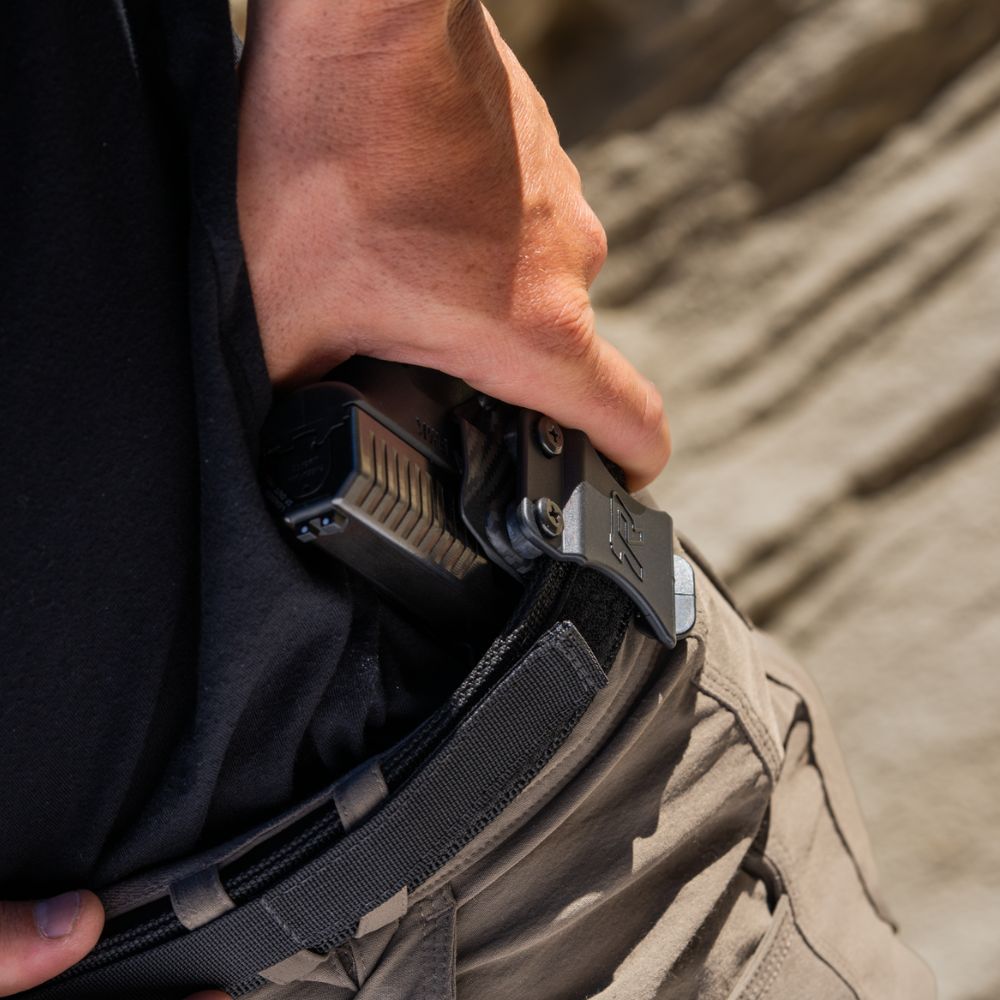
A holster does three jobs: covers the trigger, holds the gun, and keeps it in the same place. In this concealed carry beginners guide, I favor rigid holsters with good retention and a strong belt. Kydex is light and keeps its shape. Leather can be comfortable but can soften over time. Avoid clip‑on rigs that shift or peel off.
Common positions work well when set up right. Appendix carry offers fast access but needs strict care when reholstering. Strong‑side hip is simple and hides well under a light shirt. Pocket carry only if the pocket is dedicated to the holster and gun. Ankle carry is slow but can be useful when seated.
Clothing matters more than you think. A quality belt supports the holster. Patterns and darker colors hide edges. If a shirt prints, size up one notch or choose a thicker fabric. My early mistake was chasing tiny guns instead of better cover garments. A stable rig plus smart clothes beats a micro gun you cannot shoot well.

Ammunition, maintenance, and storage
Your concealed carry beginners guide would be incomplete without ammo and care. For defense, most people choose modern 9mm jacketed hollow points tested for penetration and expansion. For practice, use ball ammo to save cost, but test your carry load for function. Fire a full magazine of your carry ammo a few times a year and rotate the rest.
Clean and lube by the maker’s guide. Check sights, screws, and magazine springs. Replace recoil springs on schedule. Inspect your holster for cracks and loose hardware.
Store with care. Use a quick‑access lock box at home, especially with kids or guests. In a car, use a locked container secured to the frame. Do not leave a gun in a glove box. Theft risk is real, and you are responsible for safe storage.
Training plan for beginners
Skills fade without practice. This concealed carry beginners guide gives a simple path. Start with dry practice three times a week for 10 minutes. Work your draw with an empty gun, from concealment, with a strict focus on safety. Add trigger press, sight picture, and safe reholster. Use snap caps to practice clearing malfunctions.
At the range, focus on hits before speed. Try 3, 5, and 7 yards. Aim for palm‑size groups on demand. Add a shot timer later to build calm under stress. Take a reputable concealed carry class and a legal lecture. Add a stop‑the‑bleed or trauma class. A small tourniquet and pressure bandage in your bag can save a life.
Keep a log. Note what drill you shot, your scores, and what to fix next. Small gains, repeated, lead to quiet confidence.
Mindset, ethics, and avoiding conflict
Mindset is the quiet core of this concealed carry beginners guide. Carry to protect life, not to win arguments. Avoid ego traps. Leave bad places early. Walk away if you can. If your state requires retreat when safe, know it and follow it.
Carry less‑lethal tools. Pepper spray and a bright handheld light help you solve more problems without a gun. De‑escalation is a skill. Use calm words. Keep space. Look for exits.
If a defensive incident happens, call 911 as soon as safe. Say you were attacked, give your location, request police and medical help, and hang up. When officers arrive, keep hands visible and comply. Ask for your attorney before detailed statements. It is not about being clever. It is about being clear and protected.
Travel, reciprocity, and digital tools
Travel adds rules. This concealed carry beginners guide urges you to check reciprocity before you cross a border. Some states honor your permit. Others do not. Many places ban carry in schools, courthouses, and federal buildings. Private property rules vary.
For flights, unload, lock your gun in a hard case, and declare at the counter. Ammo must be packed per airline policy. Plan hotel storage with a lock box. Never leave a gun loose in a room or car.
Use reputable apps for maps, off‑limits places, and renewal dates. Set calendar reminders for permits, training, and battery swaps for holster lights or optics. Simple systems prevent hard days.
Budget and checklist
You can start smart without waste. This concealed carry beginners guide keeps cost in check and value high. Budget for three pillars: training, gear, and time. Do not skip training to buy a flashy add‑on. Skills beat gadgets.
Sample budget ranges:
- Permit or class fees: 50–200 dollars depending on state.
- Handgun: 350–800 dollars for a reliable compact model.
- Holster and belt: 120–200 dollars for both together.
- Ammo: 200–400 dollars to vet the gun and build a base.
- Lock box and trauma kit: 80–200 dollars combined.
90‑day checklist:
- Study your state laws and complete a class.
- Choose a reliable handgun that fits your hand.
- Buy a rigid holster and sturdy belt.
- Dry practice 10 minutes, three times a week.
- Shoot two focused range sessions per month.
- Set up secure storage at home and in your car.
- Build a small EDC: phone, light, tourniquet, ID, and permit.
- Review your plan monthly and adjust as you learn.
Frequently Asked Questions of concealed carry beginners guide
This section answers common questions from new carriers. It adds quick clarity you can use today.
Do I need a permit for concealed carry?
Some states allow permitless carry for eligible adults. Others require a permit and training. Always check your current state law.
What caliber is best for beginners?
Most new carriers do well with 9mm due to control, cost, and proven performance. Choose quality defensive ammo and train often.
How do I avoid printing under light clothes?
Use a rigid holster, a real gun belt, and darker, patterned fabrics. Move the holster slightly or try a different position to smooth edges.
Can I carry in other states when I travel?
Maybe. It depends on reciprocity and your permit. Use a current map tool and verify with state websites before you go.
What should I do if police stop me while I’m carrying?
Follow your state’s notify rule, keep your hands visible, and speak calmly. Do not reach for your gun. Comply with commands.
How often should I practice?
Short, regular sessions beat rare marathons. Aim for 10 minutes of dry practice a few times a week and two range trips a month.
Conclusion
Carrying a gun is a sober promise to protect life with care and restraint. This concealed carry beginners guide gave you a clear path: know the law, build safe habits, choose solid gear, and train with purpose. The work is steady and simple, and it pays off in quiet confidence.
Start your plan this week. Pick one skill and practice it well. If this helped, share it with a friend, subscribe for more guides, or leave a question so we can keep learning together.