Concealed carry in the United States grew from colonial norms to modern rights debates.
If you have ever wondered how everyday Americans went from tucking pistols under coats to navigating modern permits and constitutional carry, you’re in the right place. I study the history of concealed carry in the United States with care and respect. In this guide, I unpack turning points, court cases, culture, and real-world practice. You will see how the history of concealed carry in the United States shaped today’s laws, mindsets, and safe habits—without the noise.
What concealed carry means, and where it began
Concealed carry means a person keeps a weapon hidden on their body or nearby. In the United States, this most often means a handgun. The idea is old, but the rules have never been simple.
Early American law drew on English common law. Many colonies allowed guns for defense and duty. Yet people viewed hidden weapons with suspicion. Dueling, bowie knives, and pocket pistols raised fear of surprise attacks. By the early 1800s, many states regulated or banned concealed carry to curb sudden violence. These early bans shaped the first big chapter in the history of concealed carry in the United States.

Nineteenth-century rules: concealed seen as “dishonorable”
In the 1800s, states began to treat concealed carry as sneaky and unfair. Southern and frontier states led the way. Courts often upheld bans on concealed carry while allowing open carry.
A key example is Nunn v. State (Georgia, 1846). The court struck down a broad handgun ban under a state right-to-arms clause. But it allowed limits on concealed carry. After the Civil War, some rules had racial motives. Reconstruction-era “Black Codes” and selective enforcement targeted freedmen. This part of the history of concealed carry in the United States reminds us that law and power often moved together.

The Progressive Era and early 20th century shifts
In the early 1900s, urban crime and political violence pushed new laws. New York’s Sullivan Act (1911) required a license to carry a concealed pistol. It also gave wide discretion to local officials.
Other states copied parts of this model. Licenses tied to “good cause” and “good moral character” spread. The Great Depression saw more federal attention. Experts drafted model acts to standardize sales and transport. Yet state carry rules stayed diverse. That diversity is still a core feature in the history of concealed carry in the United States.

Late 20th century: from may-issue to shall-issue
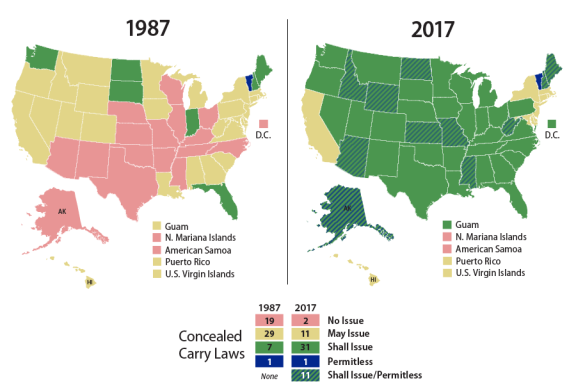
In the 1980s, a wave of change began. Florida adopted a shall-issue concealed carry permit in 1987. This meant officials had to issue a permit if you met clear rules. No special “need” was required.
Many states followed with background checks, training, and fingerprinting. Research on crime and defensive gun use grew. Some studies saw crime drops after shall-issue laws. Others found no clear effect. The data debates continue. Still, permit holders generally showed low rates of misuse in state reports. This period set the stage for the modern history of concealed carry in the United States.

The Supreme Court era: Heller, McDonald, and Bruen
Three Supreme Court cases changed the map. District of Columbia v. Heller (2008) held that the Second Amendment protects an individual right to keep a handgun in the home for self-defense. McDonald v. Chicago (2010) applied that right against the states.
New York State Rifle & Pistol Association v. Bruen (2022) went further. The Court said that requiring special “proper cause” to carry in public violates the Second Amendment. Courts must now test gun laws against text and history. After Bruen, many states revised may-issue systems to shall-issue. They also listed more “sensitive places” where carry is restricted. Ongoing cases will define those limits. These rulings anchor the modern phase in the history of concealed carry in the United States.

Today’s landscape: permit types, reciprocity, and “constitutional carry”
Today, most states issue permits on a shall-issue basis. A growing number allow permitless or “constitutional carry.” This lets eligible adults carry concealed without a permit. Many still offer optional permits for reciprocity when traveling.
Key terms you will see:
- May-issue: permits only if an official finds “good cause.” Now rare after Bruen.
- Shall-issue: permits issued if you meet set criteria like background checks.
- Permitless or constitutional carry: no permit needed for eligible adults.
- Reciprocity: one state honors another state’s permit.
- Sensitive places: schools, courthouses, and other locations where carry is restricted.
By the mid-2020s, more than half of states allow permitless carry. Yet many still require permits in some settings. The exact rules vary. Always check your state’s code and local updates. This patchwork is a constant theme in the history of concealed carry in the United States.
Culture, safety, and training: how practice followed policy
Law is only part of the story. Culture decides how people carry. Rural and urban areas differ in habits, holsters, and comfort. In classes I observed, certified instructors stressed four rules: keep the muzzle in a safe direction, finger off the trigger, know your target, and know what is beyond it.
They also taught judgment skills. Avoid risky places. Watch your body language. Control your voice. Use a belt and holster that cover the trigger guard. Many courses add first aid and tourniquet skills. This human side of the history of concealed carry in the United States matters as much as statutes.
Data, debates, and what we really know
People ask if concealed carry reduces crime. The answer is complex. Data sets differ. Cities and rural counties show unique patterns. Many studies find no large crime effect either way. Permit holders tend to have low arrest rates. But even low risk can be serious in crowded places.
Defensive gun use numbers vary by method. Survey studies show higher counts. Police report data shows lower counts. Both have limits. The best habit is to seek training, know the law, and plan to avoid conflict. That is a steady lesson across the history of concealed carry in the United States.
Timeline highlights in the history of concealed carry in the United States
- 1600s–1700s: Colonial arms norms form. Hidden weapons seen with suspicion.
- Early 1800s: States begin to ban or restrict concealed weapons.
- 1846: Nunn v. State protects open carry, allows concealed limits.
- 1911: New York’s Sullivan Act starts modern licensing.
- 1968: Federal Gun Control Act reshapes the market but not state carry rules.
- 1987: Florida adopts shall-issue. Spread follows in many states.
- 2008: Heller recognizes an individual right for home defense.
- 2010: McDonald applies that right to the states.
- 2022: Bruen rejects “proper cause” and sets a history-based test.
- Mid-2020s: Permitless carry becomes common in a majority of states.
Related concepts that shape carry rules
Concealed carry does not exist alone. It links to other ideas. Open carry allows visible firearms in public, though rules vary. Stand-your-ground and duty-to-retreat laws affect when force is lawful.
State preemption stops cities from writing stricter gun rules. Red flag or extreme risk laws allow temporary removal in crisis. Sensitive places and signage rules can make or break a day’s plan. All of these touch the history of concealed carry in the United States by shaping daily choices.
Practical lessons from the field
Over the years, I sat in classrooms and on live-fire lines. I spoke with instructors, students, and attorneys who teach self-defense law blocks. A few patterns stood out.
- Know before you go. Map sensitive places. Check reciprocity if you travel.
- Buy once, cry once. A safe holster that guards the trigger is worth it.
- Train decisions, not just draws. De-escalation protects your future.
- Store with care. Quick-access safes help balance speed and safety at home.
- Keep records. Save training certs and range logs. They matter after an incident.
These lived insights sit next to the big legal milestones. Together, they form a real picture of the history of concealed carry in the United States that you can use.
Frequently Asked Questions
When did concealed carry start in the United States?
Concealed carry dates to the early republic, but rules formed in the 1800s. Many states banned hidden weapons while allowing open carry.
Is concealed carry legal nationwide?
Federal law sets a floor, but states set most carry rules. Concealed carry is legal in every state in some form, with very different paths.
What did the Bruen decision change?
Bruen ended broad “proper cause” rules in may-issue states. It set a test based on text and history, which now guides lower courts.
How do reciprocity agreements work?
Reciprocity means one state honors another state’s permit. Always confirm the latest agreements, as they can change without much notice.
What is constitutional carry?
Constitutional carry allows eligible adults to carry concealed without a permit. Many states also keep optional permits for travel.
Do most states require training for a permit?
Many shall-issue states require training and live-fire. Permitless carry states may still require training for permits used in reciprocity.
Are defensive gun use numbers reliable?
Estimates vary due to methods and reporting gaps. It is best to read multiple studies and understand each one’s limits.
What are common mistakes new carriers make?
Poor holster choice, lack of legal knowledge, and weak situational awareness top the list. Fix these with quality gear, training, and calm habits.
How did race and class shape early laws?
Some 19th-century rules and enforcement targeted freedmen and the poor. History shows that power and prejudice influenced policy.
Where is concealed carry banned even with a permit?
Sensitive places often include schools, courthouses, and some government sites. Private property rules and posted signs also matter.
Conclusion
The history of concealed carry in the United States is a long arc. It runs from colonial norms to modern rights, from bans to permits, and into the age of Bruen. Law, culture, and training shaped each other at every turn.
Use this knowledge to act with care and confidence. Learn your state’s rules, invest in training, and plan to avoid conflict. If this guide helped, subscribe for updates, share it with a friend, or leave a comment with your questions and stories.