Unload, field strip, clean the bore and parts, lube lightly, function check.
You carry for peace of mind, so your gun must run when it counts. In this guide, I’ll show you how to clean your concealed carry gun the right way. I’ve spent years maintaining daily-carry pistols in tough conditions. You’ll get clear steps, simple tools, and small tips that make a big difference in reliability and safety.

Why cleaning your carry gun matters
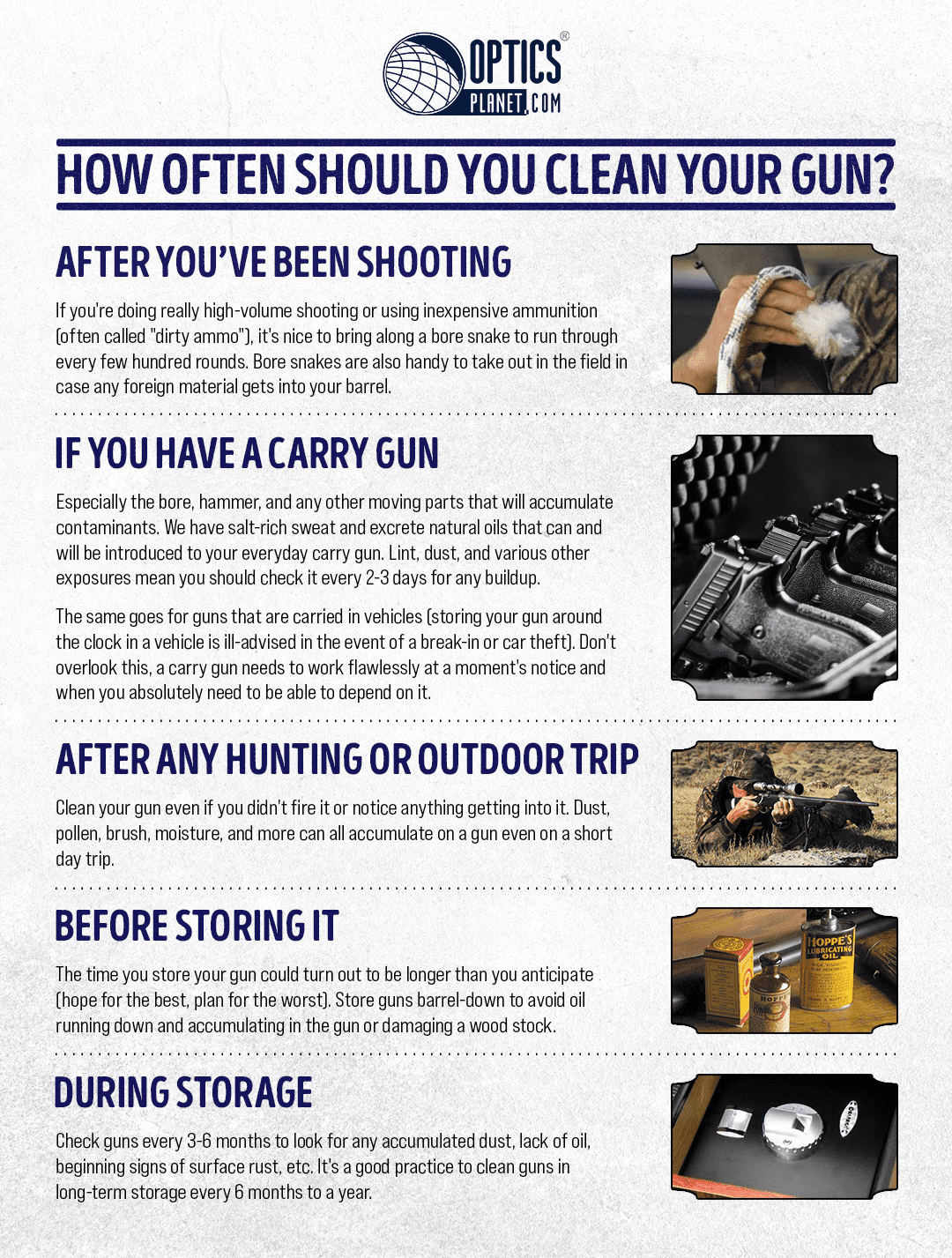
Pocket lint, sweat, dust, and carbon build up fast in a carry gun. Even a few days inside a warm waistband can attract grime and moisture. Add a range session, and the internals get dirty and dry.
That is why knowing how to clean your concealed carry gun is part of responsible ownership. Clean guns feed better, extract better, and resist rust. Your life deserves that margin of safety.

Safety first: clear the gun and set up
Point the gun in a safe direction. Remove the magazine first. Lock the slide open and check the chamber with your eyes and a finger. For a revolver, open the cylinder and remove all rounds.
Move ammo to another room while you work. Wear eye protection and gloves if you like. Read your owner’s manual before you start. Safe habits are step one of how to clean your concealed carry gun.
Tools and supplies that actually help
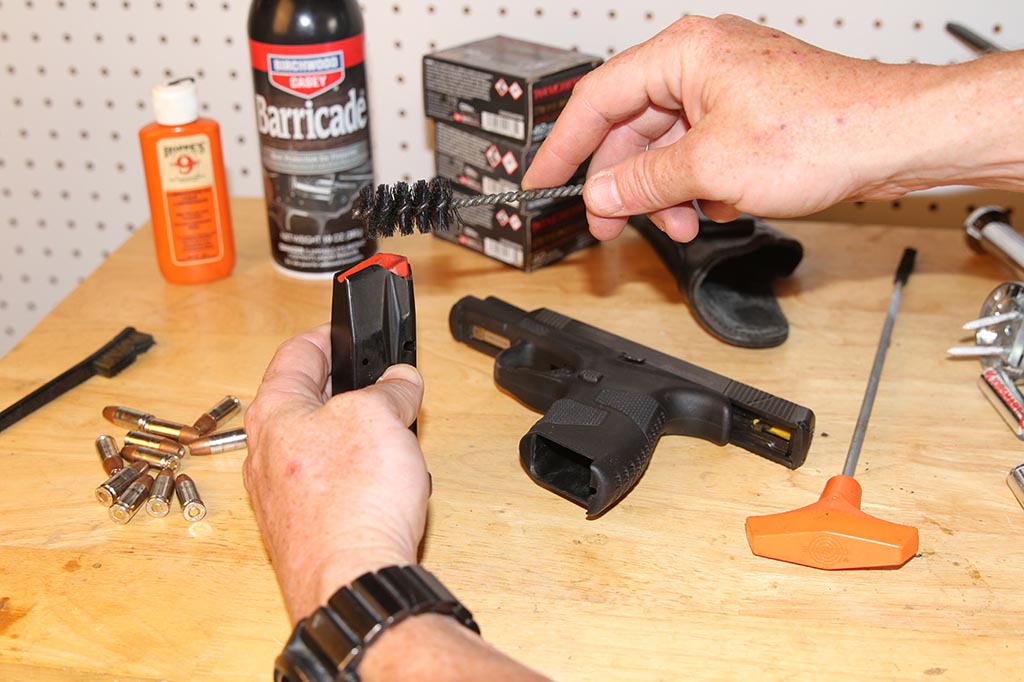
You do not need a big kit. A small, smart setup is best.
- Cleaning mat to protect your table
- Bore brush and patches sized for your caliber
- Pull-through cable or one-piece rod
- Solvent or CLP for carbon and light copper
- Quality oil and a small grease for high-wear spots
- Nylon brush, cotton swabs, toothpicks, and a microfiber cloth
- Compressed air or a hand blower for lint
- Chamber brush for revolvers and a dental pick for the extractor
Avoid steel brushes on your bore. Avoid flooding parts with spray oils. Keep it simple. A lean kit is enough for how to clean your concealed carry gun at home.

Field-strip basics for common carry guns
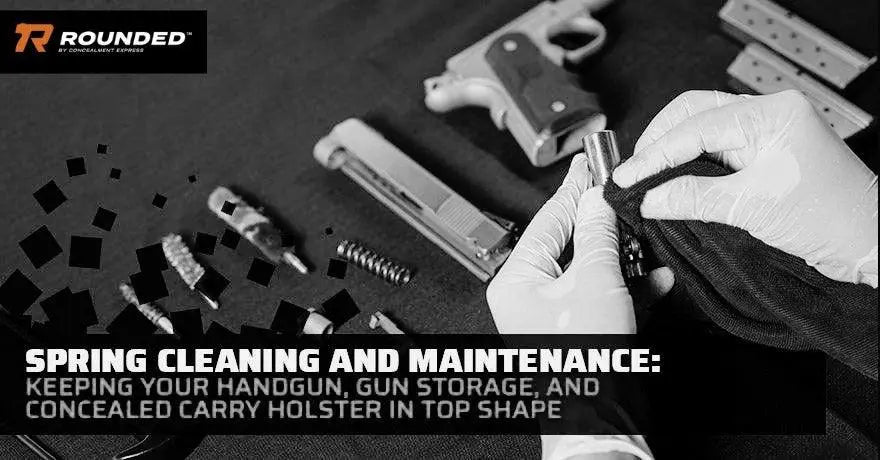
For most semi-auto pistols, remove the magazine, clear the chamber, then field strip per the manual. That often means easing the slide off, removing the recoil spring and barrel. Do not force anything. Watch for small springs and pins.
For revolvers, open the cylinder. You will clean with the gun assembled. Grips can stay on unless the maker says otherwise. The manual is your map for how to clean your concealed carry gun without damage.

Step-by-step: how to clean your concealed carry gun
Follow these steps. Take your time. Clean parts, then inspect.
- Start with the bore
- Wet a patch with solvent and pull it through the barrel from chamber to muzzle.
- Let it sit a few minutes.
- Run a bore brush through a few times.
- Follow with dry patches until they come out clean.
- Clean the chamber and feed area
- Use a chamber brush or a nylon brush with solvent.
- Scrub the feed ramp, chamber mouth, and locking areas.
- Wipe dry with patches or cloth.
- Slide and bolt face
- Scrub the breech face, extractor claw, and slide rails with a nylon brush.
- Use a pick to lift carbon from corners.
- Wipe clean, then dry.
- Frame and internals
- Brush rails, trigger bar tracks, and the ejector area.
- Do not pack lint into crevices; lift and wipe it away.
- Keep solvent off striker channels and firing pin holes.
- Magazines
- If your mag disassembles, remove the base plate, spring, and follower.
- Wipe inside with a dry cloth.
- No oil inside mags. A clean, dry mag is key.
- Revolver specifics
- Clean each chamber like a mini-barrel.
- Scrub the cylinder face and forcing cone with solvent.
- Clean under the extractor star. Lint here causes misfires.
As you work, repeat the phrase to stay focused: how to clean your concealed carry gun is about clean, dry, lightly lubed parts. Inspect as you go for cracks, burrs, or odd wear. Spot small problems before they grow.
Drying, lubrication, and reassembly
After cleaning, dry all parts. Use a little compressed air for tight spots. Moisture hides in striker channels and under extractors.
Lube only what moves. A drop on slide rails, barrel exterior, hood, and locking lugs. A smear of grease on high-wear rails if the maker allows. Keep oil out of the firing pin channel. For revolvers, one tiny drop on the cylinder crane, ejector rod threads, and the hand pivot. Wipe off any extra. This light touch is central to how to clean your concealed carry gun for daily carry.
Reassemble per the manual. Make sure pins and plates sit flush. Nothing should bind.
Function check and confidence test
Do a safe function check with no ammo near the bench.
- Rack the slide. Press the trigger in a safe direction.
- Hold the trigger to the rear, rack again, then release to feel the reset.
- Engage and test safeties and slide lock.
- Insert an empty magazine to test slide catch.
- For revolvers, check cylinder rotation, lockup, and the ejector stroke.
If your maker allows, use snap caps to test feeding and extraction. At your next range trip, fire a few magazines of your chosen practice ammo. Confirm zero and reliability. This seals the work you did on how to clean your concealed carry gun.
Maintenance schedule that fits real life
Clean after every range session. If you carry daily but do not shoot, do a quick clean and lube check once a month. Do a weekly lint check of the mag well, muzzle, and sights.
After rain, sweat, or beach trips, wipe down at once. Salt is tough on metal. Clean magazines every few months if you pocket carry a spare. A steady rhythm makes how to clean your concealed carry gun faster each time.

Common mistakes to avoid
Too much oil attracts lint and slows parts. Keep it light. Oil in striker channels creates misfires. Keep these dry.
Do not use harsh solvents on polymer or night sights. They can fade paint or swell parts. Do not skip the magazines. Many feed issues start there. Recoil springs and mag springs wear out. Replace them on schedule. These small wins shape how to clean your concealed carry gun with confidence.
Storage, holsters, and records
Let the gun rest a few minutes after you finish. Wipe off any prints. Check your holster for grit and loose threads. Clean the holster interior with a dry brush.
Store off-body guns in a dry, locked place with a desiccant. Note the date and round count in a small log. I do this after every session. It helps track parts life and refines how to clean your concealed carry gun over time.
Frequently Asked Questions of how to clean your concealed carry gun
How often should I clean a carry gun I didn’t shoot?
Do a quick check weekly for lint and rust. Do a full clean and light lube at least once a month or after heavy sweat, rain, or dust.
Can I use one product for cleaning and lubrication?
A good CLP works for most needs. If you shoot a lot, a dedicated solvent plus a quality oil or grease gives better results.
Do I have to detail strip my pistol?
No. A field strip is enough for most users. Leave detail strips to a gunsmith or follow the maker’s armorer guidance.
Should I oil my magazines?
No. Keep magazines clean and dry inside. Oil traps grit and can slow the follower.
How much lube is enough?
Use a drop where parts slide and a thin film on the barrel exterior. If you can see wet pools, it is too much.
What spots matter most on a semi-auto?
Rails, barrel hood, locking lugs, breech face, extractor, feed ramp, and chamber. These areas drive feeding, lockup, and ejection.
How do I prevent rust from sweat?
Wipe down daily with a silicone cloth and use a rust-resistant oil. Clean under the grips if you notice moisture.
Conclusion
Clean guns run. Start with safe clearing, use a simple kit, remove carbon and lint, lube lightly, and test function. Treat your routine like a checklist, and you will trust the gun you carry.
Set a date on your calendar this week to clean and log your next session. If this guide helped, subscribe for more carry-smart tips, or drop a comment with your best trick for keeping a daily-carry gun spotless.