Secure the slide, use a sight pusher, torque the front screw, then confirm zero.
If you want to learn how to install Glock sights with confidence, you’re in the right place. I’ve installed and tested many Glock sight sets over the years, from polymer to steel, fiber optic to tritium. In this guide, I’ll show you how to install Glock sights step by step, avoid common mistakes, and finish with a clean, centered zero you can trust.

Safety first, always
- Clear the gun. Remove the magazine, lock the slide open, and check the chamber by sight and touch.
- Separate the slide from the frame. Remove the recoil spring and barrel.
- Work on a clean bench with good light. Wear eye protection.
- Follow local laws. Some regions regulate what you can change.
- If you feel unsure, a certified gunsmith can do it fast and safely.
Before you learn how to install Glock sights, start with a safe setup. A calm, careful approach beats speed every time.
Tools and materials you’ll need
- Bench block or folded towel to support the slide
- Non-marring vise jaws or a padded vise
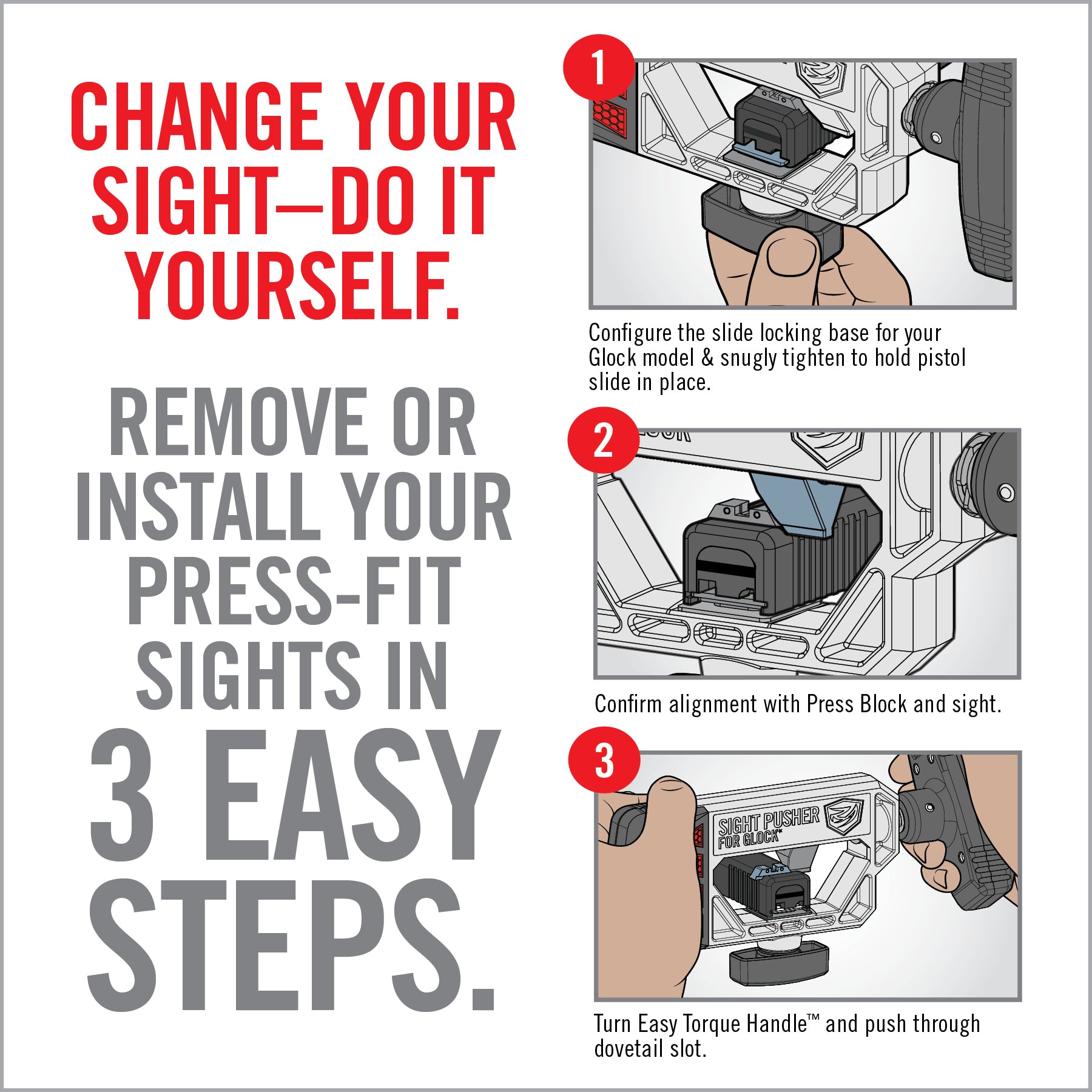
- Rear sight pusher tool, or a brass/nylon punch with a small hammer
- Glock front sight tool (3/16-inch hex nut driver) or a thin-walled 3/16-inch nut driver
- Inch-pound torque driver set very low
- Blue threadlocker (non-permanent), and isopropyl alcohol for degreasing
- Painter’s tape, fine-tip marker, small ruler or calipers
- Cotton swabs and a small brush
- Optional: feeler gauges for centering, a dab of light oil for tight dovetails
To make how to install Glock sights smooth, gather tools first. A proper sight pusher and the right front sight tool prevent slips and dings.

Understanding Glock sights and fit
- Rear sights: Most use a dovetail in the slide. It’s usually a straight dovetail, not tapered. You can push from either side, but pick one direction and stay consistent.
- Front sights: Modern Glock slides use a small screw from the underside of the slide nose. Older polymer sights may be staked or very light press-fit.
- Heights and profiles: Common heights are in millimeters. Suppressor-height sights are taller. Match the height to your use case.
- Materials: Steel sights take abuse and hold zero better than polymer. Tritium glows in low light. Fiber optic pops in daylight. Blacked-out rears reduce clutter.
Knowing these parts makes how to install Glock sights easier. You’ll choose the right fit, avoid damage, and get a repeatable zero.

Preparation and removal
- Unload and field strip the pistol.
- Tape the slide to protect the finish where tools may touch.
- Degrease the front sight channel, screw hole, and rear dovetail with alcohol.
- Mark a centerline on the slide dovetail with a thin marker. This is a handy reference.
Removing old sights
- Front: Use the 3/16-inch tool to loosen the front sight screw from inside the slide. If it is staked or polymer, support the slide and lift it out gently.
- Rear: Loosen any set screw. Use a sight pusher to press the sight out. If using a punch, use a brass or nylon punch and light taps. Keep it straight and supported.
This setup stage sets you up for the rest of how to install Glock sights. Clean metal-to-metal contact is key for a solid hold.

Install the front sight
- Test fit: Place the front sight into the slot. It should sit flat with no rocking.
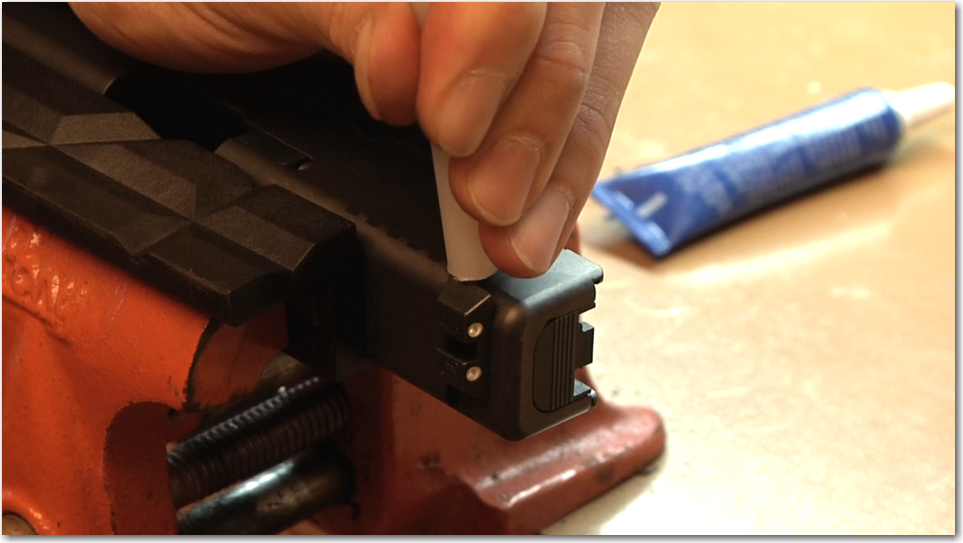
- Prep: Degrease the screw and sight threads. Add a tiny drop of blue threadlocker to the screw.
- Tighten: Hold the sight square and centered while tightening from inside the slide. Use gentle torque. Many makers recommend very low torque; think snug, not “gorilla tight.” If you have a torque driver, set it low, often around 10 inch-pounds unless your instructions say otherwise.
- Confirm: Check that the sight is straight and square to the slide.
This is the most common place I see mistakes. When people ask how to install Glock sights, they often overtighten the front screw. Keep it snug with threadlocker, and it will hold.

Install and center the rear sight
- Start the sight by hand. It should begin to enter the dovetail without force. If it is extremely tight, lightly stone the bottom of the sight base, not the slide.
- Press in with a pusher. Work in small moves. Keep the sight level.
- Center the sight. Use your marker line, calipers, or measure equal gaps on both sides. A feeler gauge can help.
- Set screw: Degrease and add a tiny drop of blue threadlocker to the set screw if present. Snug it with a small driver.
Tip from experience: If you feel the need to swing a hammer hard, stop. Re-check alignment or gently relieve the sight base. Slow and steady wins this part of how to install Glock sights.
Verify alignment and zero at the range
- Mechanical check: Rack the slide and look through the sights. The front post should sit centered in the rear notch. If it looks canted, re-seat.
- Boresight: At home, align the sights on a distant point and confirm they appear centered.
- Live fire: Start at 10 yards. Fire a slow five-shot group. Adjust:
- Move the rear in the direction you want the point of impact to go.
- If shots are left, move the rear left a little. If high or low, consider a different front sight height.
- Confirm at your preferred zero distance. Many shooters confirm at 15 or 25 yards.
After you follow how to install Glock sights, a simple range check locks it in. Record your final setting so you can repeat it later if needed.
Troubleshooting common issues
- Front screw keeps loosening: Degrease better and use a small drop of blue threadlocker. Let it cure per the label before firing.
- Rear sight won’t start: Check for burrs. Lightly stone the sight base. Never file the slide dovetail.
- Rear sight drifts during fire: Ensure the dovetail fit is snug and the set screw is threadlocked and snug.
- Point of impact still off: Confirm ammo type and distance. You may need a different sight height.
- Night sight alignment looks off: Tritium vials can trick your eye in dim light. Check in bright light with a hard front sight focus.
These are the hiccups I see most when teaching how to install Glock sights. Patience and clean prep solve most of them.
Maintenance and care
- Re-check screws and set screws after the first 100 rounds and after each cleaning.
- Keep oil away from the front sight screw. Oil can weaken threadlocker.
- Clean fiber optic rods with a dry cotton swab only.
- Inspect tritium sights yearly. Replace them if they dim over time.
Part of how to install Glock sights is planning for upkeep. A quick post-range check keeps your zero steady for the long haul.
Mistakes to avoid
- Skipping the unload-and-check step
- Using red, permanent threadlocker
- Filing the slide instead of the sight base
- Hammering hard without proper support
- Ignoring the manufacturer’s torque and care notes
Avoiding these saves time and money. When friends ask me how to install Glock sights, these are the traps I warn them about first.
When to see a gunsmith
- You lack a sight pusher and the rear sight is extremely tight
- The dovetail looks damaged or out of spec
- You stripped the front sight screw
- You want a duty gun ready for a deadline and can’t risk errors
A pro install is often quick and affordable. It is still your win, because knowing how to install Glock sights helps you inspect the work and keep it running right.
Frequently Asked Questions of how to install glock sights
Do I need a sight pusher, or can I use a punch?
A pusher is safer and gives cleaner results. A brass or nylon punch works if you go slow, support the slide, and keep the sight level.
What threadlocker should I use on Glock sights?
Use blue, medium-strength, non-permanent threadlocker in a tiny amount. Avoid red threadlocker because it can make future service very hard.
How tight should I torque the front sight screw?
Very low torque is best. If you have no spec, set it low on an inch-pound driver and go snug with threadlocker, not force.
Can I install suppressor-height sights the same way?
Yes, the steps are the same. Take more care with alignment because the taller profile makes cants easier to notice.
How long should I wait before shooting after installation?
Let threadlocker cure per the label, often overnight. A full cure helps prevent loosening under recoil.
What if my point of impact is left or right after install?
Drift the rear sight in the direction you want the hits to move. Make small moves and confirm with groups.
Are polymer factory sights worth replacing?
Many shooters upgrade to steel for durability. Steel sights resist bumps, hold zero better, and are easier to fine-tune.
Conclusion
You now know how to install Glock sights from start to finish: set up safely, remove and clean, seat the front sight with care, press-fit the rear sight with control, then confirm zero at the range. Take your time, use the right tools, and keep your moves small and deliberate.
If you are ready, gather your tools, follow the steps, and make that clean, centered install today. Want more hands-on tips and gear reviews? Subscribe for updates or drop your questions in the comments so I can help you dial it in.