Choose a holster with full trigger coverage, solid retention, comfort, concealment, and adjustability.
If you carry, you know gear can make or break your day. In this guide, I share the things to look for in a concealed carry holster based on years of daily carry, training, and helping new shooters set up safe, reliable rigs. I keep it simple, real, and tested, so you can pick with confidence and carry with peace of mind.

Safety first: trigger coverage and safe reholstering
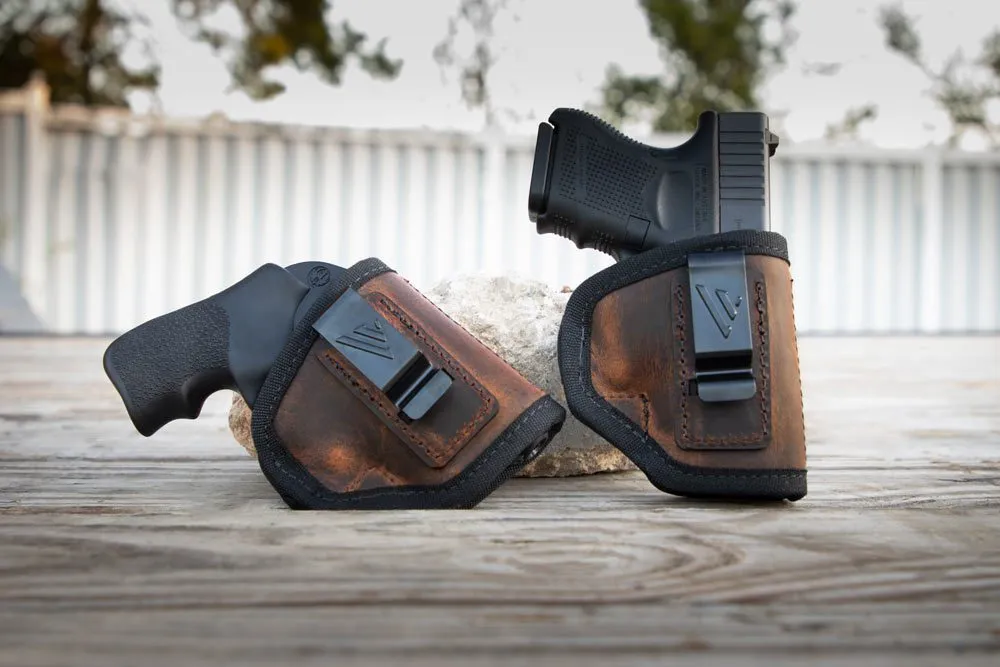
One of the core things to look for in a concealed carry holster is full trigger coverage. The trigger guard must be blocked on all sides by a rigid shell. This helps prevent snags from shirts, cords, or fingers.
Look for a holster that holds its mouth open when you remove the gun. This lets you reholster without fishing or muzzling yourself. I learned this the hard way with a soft nylon sleeve years ago. It collapsed, and I had to remove the holster to put the gun away. That is slow and risky.
What to check
- Full trigger coverage with no gaps from any angle
- Rigid mouth that does not collapse under belt pressure
- A clear path for the front sight and slide
Pro tip
- Reholster slow and deliberate. Speed belongs in the draw. Safety belongs in the reholster.
Source: 88tactical.com
Retention that balances security and speed
Among the most important things to look for in a concealed carry holster is retention that you can set and trust. Most IWB holsters use passive retention from a molded shell. You will feel and hear a clear click as the gun seats.
Choose adjustable retention with screws and spacers. Set it so you can draw clean with a sharp pull, yet the gun does not fall out when you bend or jog. For concealed carry, Level 1 passive retention is typical. Extra levers and straps can slow the draw and add bulk.
What to test at home
- Unload the gun, check twice, then holster
- Turn upside down over a couch and shake lightly
- Draw with a firm, straight pull; no binding or grind
Mistakes to avoid
- Overtightening screws until the shell flexes or cracks
- Retention so loose the gun rattles or shifts

Source: bluealphabelts.com
Comfort and fit for real days, not just range days
Comfort is one of the things to look for in a concealed carry holster because comfort drives consistency. If it digs, you will leave it at home. Smooth edges, rounded muzzle ends, and soft backing help a lot.
Appendix carry often benefits from a wedge that tilts the muzzle out and the grip in. A wing or claw can push on the belt and roll the grip closer to the body. In a long summer, I found a small foam wedge changed my whole day. Hot spots went away, and I stopped adjusting in public.
Comfort checkpoints
- Rounded edges and a sweat guard that matches your gun and torso
- A wedge for appendix; a wing/claw if your grip prints
- A belt that spreads pressure and does not fold

Source: shootlikeagirl.com
Concealment and printing control
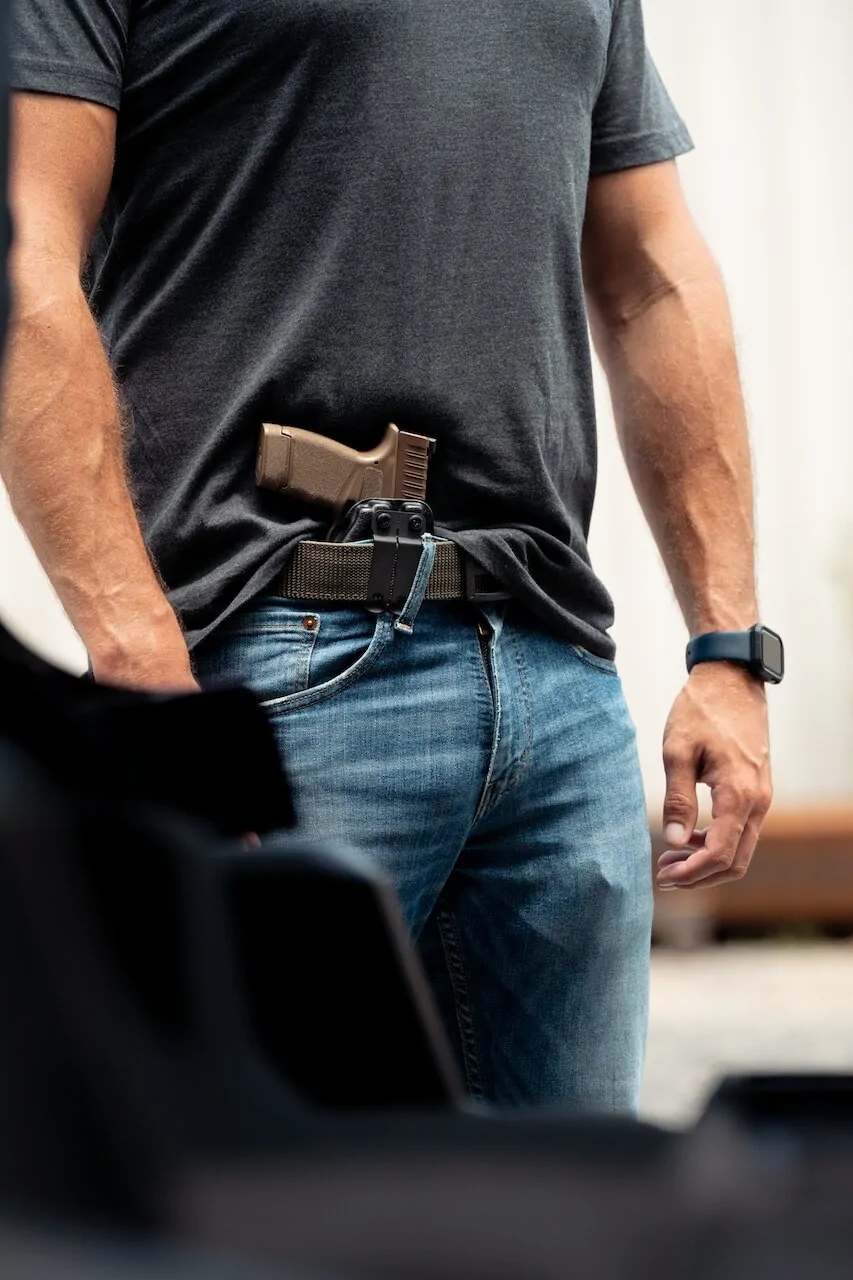
Concealment features are key things to look for in a concealed carry holster. You want the grip tucked, the slide flat, and the belt doing real work. Cant and ride height shape how the gun hides under your clothes.
If your grip prints, try a claw that pushes against the belt. If the muzzle pokes, add a wedge or lower the ride height. Small tweaks matter. A quarter inch change can vanish a print.
Simple concealment moves
- Lower ride height for deeper tuck; raise for a faster draw
- Add a claw to roll the grip inboard
- Choose shirts with a bit of drape and a pattern to break shadows
Source: harrysholsters.com
Adjustability: cant, ride height, and belt angle
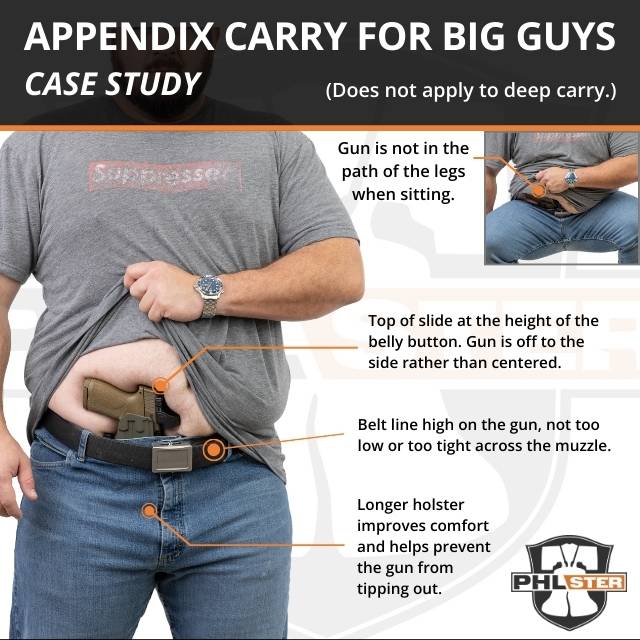
Adjustability is one of the overlooked things to look for in a concealed carry holster. Small changes help fit your body and gun. Look for slots or holes that let you move clips up or down, and tilt the holster.
Tune in small steps, then wear it for a full day. A ten-minute test in your bedroom is not enough. Sit, drive, walk, and tie your shoes. Track what rubs and what prints.
Dial-in steps
- Start neutral: mid ride height, neutral cant
- Adjust one variable at a time
- Lock screws with thread locker once you find your sweet spot
Source: phlsterholsters.com
Material choices that actually matter
Material is on the list of things to look for in a concealed carry holster because it shapes safety, speed, and upkeep.
Common options
- Kydex or similar thermoplastic. Holds shape well, fast draw, easy to clean, stable in heat and sweat.
- Hybrid (Kydex shell with a soft backer). More comfort at first, but watch for sweat soak and shell pullback.
- Leather. Classic and comfy, but can soften and collapse with age. Needs care.
Aim for a rigid mouth and a formed trigger guard. Check that the sight channel clears your sights. If you carry daily, plastics tend to keep their shape best over years of use.

Attachment hardware and the belt that makes it all work
Clip quality is one of the things to look for in a concealed carry holster that many people miss. Cheap spring clips can pop off when you draw. Strong steel clips, soft loops, or dual clips keep the holster planted.
Your belt matters as much as the holster. Use a dedicated gun belt with real stiffness. The belt should fit your clip size. A floppy belt lets the grip lean away and print.
Hardware priorities
- Metal clips or soft loops that bite the belt and resist pull-off
- Tuckable options if you dress in tucked shirts
- Quality screws, washers, and some thread locker after final fit

Source: vedderholsters.com
Compatibility with optics, lights, and tall sights
Optic and light fit are modern things to look for in a concealed carry holster. If you run a red dot, you want an optic cut. If you have tall sights, you need a clear sight channel. For a weapon light, you must choose a light-bearing holster built for that exact model.
Light-bearing rigs add bulk. They can still conceal well with a wedge and a claw. Test before you commit. On my light-carry setup, dropping ride height a notch and adding a larger wedge fixed printing.
Body type, carry position, and lifestyle
Match to your body is part of the things to look for in a concealed carry holster. There is no one-size fit. Appendix works great for many, but not for all. Strong-side IWB at 3–4 o’clock often hides well under a jacket. Pocket carry needs a true pocket holster that breaks the outline and covers the trigger.
Women often find higher ride height and different cant angles help with high-waist pants. A claw can be very useful with curvier hips. Try gear with a fair return window so you can test at home with your wardrobe.
Position tips
- Appendix for speed and access while seated
- Strong-side IWB for easier conceal under layers
- Pocket carry only with a real pocket holster and a clean pocket
Training, testing, and maintenance
Real testing is one of the practical things to look for in a concealed carry holster. A holster can feel fine until you move fast. Train dry first with an unloaded gun. Practice a safe, straight draw and a slow, careful reholster. Then run live reps at the range if allowed.
Keep hardware tight. Check screws each week. A drop of thread locker after final fit helps. Clean sweat and lint from the shell. Inspect the trigger guard area for cracks.
Safety reminders
- Follow safe-handling rules at all times
- Use a safe backstop in dry practice
- Stop if anything feels off and fix the cause
Budget, value, and buying smart
Value and policy are real-world things to look for in a concealed carry holster. A good holster often costs less than one box of premium ammo. Look for return policies, lead times, and real customer support.
Beware of no-name copies with thin shells and weak clips. I have seen clips bend on the first draw. Buy once, cry once. Your holster secures a lethal tool. It deserves care and quality.
Smart buyer checklist
- Clear specs for your exact gun, light, and optic
- Real photos, not only renderings
- Reasonable ship times and warranty
Legal and ethical considerations
Legal fit is also on the list of things to look for in a concealed carry holster. Know your local laws on concealed carry, prohibited places, and duty to inform. Some areas have rules on printing or open display.
Keep your gear safe at home and in your car. Use a holster or a case that covers the trigger any time the gun is not in your hand. Responsible carry protects you and those around you.
Frequently Asked Questions of things to look for in a concealed carry holster
What is the most important safety feature in a holster?
Full trigger coverage with a rigid shell. It stops foreign objects from touching the trigger and helps prevent negligent discharges.
How tight should holster retention be?
Tight enough that the gun will not fall out during normal movement, but not so tight that you must jerk or twist to draw. You should feel a positive click when it seats.
Is Kydex better than leather for concealed carry?
For daily carry, Kydex keeps its shape, resists sweat, and allows easy reholstering. Leather can work well but needs more care and can soften over time.
Do I need a special holster if I have a red dot or weapon light?
Yes. You need an optic-cut holster for a red dot and a model-specific light-bearing holster for a weapon light. Sight channels should also clear taller sights.
How do I reduce printing without buying new clothes?
Tune ride height and cant, add a claw and a wedge, and use a stiffer belt. Small adjustments often fix printing more than wardrobe changes.
Can one holster work for every season?
Sometimes, but not always. Many carriers use an appendix rig in summer and a strong-side IWB or OWB under layers in winter for comfort and concealment.
Are hybrid holsters good for beginners?
They can be, as the soft backer feels comfy. Make sure the shell still has strong retention and the mouth stays open for safe reholstering.
Conclusion
The right holster should be safe, secure, and easy to wear all day. Focus on full trigger coverage, solid retention, comfort, concealment, and smart adjustability. Those core points will guide every other choice you make.
Take one step this week. Choose one or two holsters that fit your gun and try them at home with your belt and clothes. Make small tweaks, train safe, and carry with confidence. If this helped, share it with a friend, subscribe for more practical carry tips, or leave a comment with your setup and lessons learned.