The best IFAKs and trauma kits are fast, trusted, and easy to carry.
Picture this: you’re on a hike, at the range, or driving home. An accident happens. You have seconds to act. A calm mind helps, but the right gear is what stops bleeding and buys time for help to arrive. That’s where the best IFAKs and trauma kits shine. They hold proven tools like a real tourniquet, a compression bandage, and chest seals. They ride in your car, backpack, or belt. You hope you never need one. But when you do, it turns panic into a plan. I’ve tested and handled many kits. Below, I share what’s worth your money, what to skip, and how to pick the right setup with confidence.

Survival First Aid Kit with…
Military Emergency Hemostasis Kit ▶ Contains 6″ Israeli Bandage, Tap-on Tourniquet, Chest Seal, Splint, Knife, EMT Blunt Scissor, Compressed Gauze, Wrinkle Bandage 3″ x 5 yds, Self-Adhesive Bandage 2″ x…

RHINO RESCUE IFAK Refill Kit…
[Emergency Medical Treatment] The RHINO RESCUE IFAK refill kit is designed for outdoor adventures, hunting, camping, and addressing emergencies during accidents, ensuring quick and effective treatment [First Responder Refill Kit]…

RHINO RESCUE IFAK Trauma Kit…
[Emergency Medical Treatment] The RHINO RESCUE IFAK kit contains essential medical supplies to manage injuries in emergencies. It includes 4″ Israeli bandage, gauzes, tourniquet, and emergency blanket [Bone Fracture Treatment]…
Survival IFAK with Israeli Bandage (Black)

This Survival IFAK hits the big needs: bleeding control and chest injuries. It includes a tourniquet, an Israeli bandage, a chest seal, and a splint. The pouch is tactical and MOLLE-ready, which makes it easy to mount on a pack, plate carrier, or headrest. The layout is simple, so you can grab what you need fast.
In hand, the bag feels rugged enough for daily carry. The Israeli bandage is a good choice for quick pressure on a wound. Having a chest seal on board adds real value for penetrating chest trauma. The splint helps with fractures and sprains, which often get ignored in small kits. For anyone new to this space, this is a balanced loadout.
Pros:
- Well-rounded mix for major trauma
- Includes an Israeli pressure bandage
- Chest seal adds real-world capability
- MOLLE pouch for flexible mounting
- Compact size for car, range, or hiking
Cons:
- Tourniquet brand may vary; verify quality
- Limited airway tools beyond trauma focus
- May need gloves and shears upgrade
My Recommendation
If you want one kit that covers the big threats, this is a smart pick. It is ideal for a car IFAK, a range bag, or a home emergency shelf. The mix of chest seal, tourniquet, splint, and Israeli bandage gives you a strong, simple base. If you want the best IFAKs and trauma kits for general use, put this one near the top of your list.
| Best for | Why |
|---|---|
| Everyday car carry | Balanced tools for the most common serious injuries |
| Range or field training | MOLLE pouch mounts easy and opens fast |
| New buyers | Simple setup with a clear focus on bleeding control |
RHINO RESCUE IFAK Refill Kit w/ CAT Gen 7

This RHINO RESCUE refill kit focuses on proven trauma items. The star is the C-A-T Gen 7 tourniquet, which many first responders trust for arm and leg bleeding control. The set rounds out with wound care supplies you can load into your own pouch. If you already have a bag or want to upgrade a weak kit, this is a smart path.
Because it is a refill pack, it skips the pouch and fluff. That keeps weight and cost down while boosting the quality of core tools. The layout is simple to sort and repack in a layout that fits your style. In other words, you get strength where it counts, and you skip extras you do not need.
Pros:
- Includes authentic CAT Gen 7 tourniquet
- Great for upgrading existing kits
- Lean, no-pouch format lowers bulk
- Good mix for bleeding control and wound care
- Easy to stage in a glove box, cargo bin, or pouch
Cons:
- No pouch included
- Fewer “comfort” items for minor injuries
- Beginners may want a ready-to-deploy bag
My Recommendation
Choose this if you already carry a pouch or want to replace lesser parts with a trusted C-A-T. It is ideal for experienced users who value quality over quantity. For those curating the best IFAKs and trauma kits, this refill lets you build a tight, high-trust setup without buying a whole new bag.
| Best for | Why |
|---|---|
| Upgrading a weak kit | Adds a trusted CAT Gen 7 without extra bulk |
| Custom pouches | Refill format packs clean into your layout |
| Experienced users | Focus on proven bleeding control tools |
RHINO RESCUE IFAK with C-A-T Tourniquet (Black)

This full IFAK from RHINO RESCUE centers on a genuine C-A-T tourniquet. The pouch is MOLLE-ready and built to ride on belts, packs, or seat backs. Inside, the layout favors fast access for bleeding control and trauma dressing. For most buyers, this is a strong all-in-one that works on day one.
The pouch opens wide, which helps under stress. The mix of gauze, compression bandage, and trauma tools covers the most likely serious events. It also keeps the focus tight, which avoids clutter when seconds matter. If you want a kit with a known, trusted TQ, this is a solid pick for duty or daily carry.
Pros:
- Includes C-A-T tourniquet for high-trust bleeding control
- MOLLE pouch with fast open design
- Good core mix for trauma response
- Ready to deploy out of the box
- Compact and ride-friendly for car or belt
Cons:
- Heavier than a refill-only pack
- Price reflects the quality TQ inside
- Some items are single-use and need restock
My Recommendation
Pick this if you want a done-for-you IFAK with a well-regarded tourniquet and a smart pouch. It fits patrol bags, range rigs, and trail kits. If you are shopping for the best IFAKs and trauma kits and want to avoid mixing parts, this has the quality parts and the clean layout you need.
| Best for | Why |
|---|---|
| Duty or range use | Trusted TQ and fast access layout |
| Daily car carry | Compact, organized, and MOLLE-friendly |
| New owners | All-in-one kit that works from day one |
IFAK Kit with TQ, 6” Israeli Bandage, Splint

This IFAK delivers the core trio many buyers want: a tourniquet, an Israeli bandage, and a splint. The MOLLE bag holds steady on a pack, a headrest, or a belt. The interior has room to add extras like gloves or shears if you want to tailor it. For a first trauma kit, it checks a lot of boxes without a big bill.
The 6-inch Israeli bandage is a strong, simple tool for heavy bleeds. The splint helps with breaks and support, which is great for hiking and travel. The tourniquet gives you a fast option when pressure is not enough. This simple spread makes it easy to learn where each item sits and how to reach it fast.
Pros:
- Core trauma tools at a friendly price
- 6-inch Israeli bandage for strong pressure
- Splint adds value for outdoor injuries
- MOLLE bag fits many carry setups
- Room to customize with your own add-ons
Cons:
- Tourniquet quality may vary by batch
- May not include chest seals
- Bag materials vary by seller lot
My Recommendation
Get this if you want a budget-friendly kit that still covers severe bleeds and limb support. It is a good pick for road trips, day hikes, and home use. For buyers trying to build the best IFAKs and trauma kits on a budget, this gives you a clean base you can upgrade over time.
| Best for | Why |
|---|---|
| Budget buyers | Solid core tools without a high price |
| Outdoor adventures | Splint and pressure bandage help on trails |
| New learners | Simple setup that is easy to practice with |
EVERLIT Trauma Kit w/ CAT Gen 7 & 36” Splint
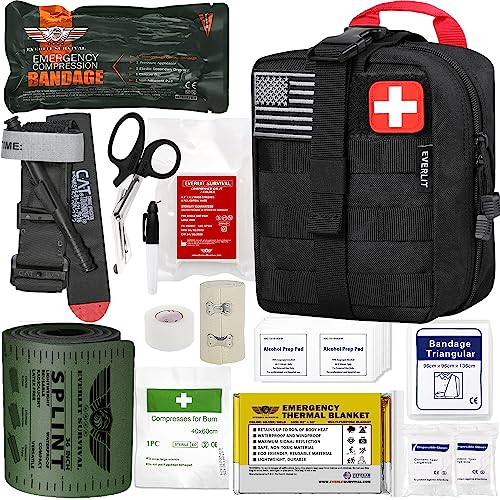
The EVERLIT kit is built for serious response with a CAT Gen 7 tourniquet and a 36-inch splint. That longer splint helps with bigger limb injuries and better support. The pouch feels robust, with a layout that makes sense under stress. There is enough room for gloves, shears, and dressings to handle many events.
This kit aims for a pro feel without confusing parts. The tourniquet is a known, respected pick for bleeding control. The bigger splint is a great add for sports, road, and backcountry use. If you want a kit that can live in the car or at the range year-round, this is a strong, confidence-boosting option.
Pros:
- Includes a trusted CAT Gen 7 tourniquet
- 36-inch splint supports larger injuries
- Durable pouch with smart internal layout
- Good balance of size and capability
- Ready for home, patrol bag, or trunk
Cons:
- More bulk than ultra-compact kits
- Higher price due to premium components
- Restock costs add up after use
My Recommendation
Choose this if you want a serious, durable kit with a C-A-T and a long splint in one package. It suits families, coaches, and range owners who plan ahead. When you compare the best IFAKs and trauma kits, this one stands out for quality parts and a pouch that holds up to real use.
| Best for | Why |
|---|---|
| Family and travel | Long splint helps with larger limb injuries |
| Coaches and range owners | Durable pouch and trusted TQ inspire confidence |
| Prepared homeowners | Broad capability with room for add-ons |
FAQs Of best IFAKs and trauma kits
What is an IFAK and how is it different from a first aid kit?
An IFAK is an Individual First Aid Kit built for trauma. It focuses on heavy bleeding and critical wounds. A standard first aid kit is for minor cuts, burns, and daily care.
What should be in the best IFAKs and trauma kits?
Key items are a proven tourniquet, pressure bandage, gauze, gloves, and chest seals. A splint and shears help too. Keep it simple and high quality.
Do I need formal training to use an IFAK?
Training helps a lot. Learn basic bleeding control and how to use your tools. Short courses and practice improve speed and confidence.
How long do items in trauma kits last?
Most items have dates on the packs. Check seals and labels each year. Replace expired or damaged parts right away.
Can I carry an IFAK in my car or on a flight?
Yes for your car. For flights, pack trauma gear in checked bags. Sharp items and some tools are not allowed in carry-ons.
Final Verdict: Which Should You Buy?
If you want a ready, trusted setup, pick the RHINO RESCUE IFAK with C-A-T or the EVERLIT kit. Both anchor on a real CAT Gen 7 and earn a spot among the best IFAKs and trauma kits.
On a budget or building custom? Choose the Survival IFAK or the IFAK with 6” Israeli Bandage, then add the RHINO Refill for an authentic TQ. Keep it simple, stage it well, and refresh it on a schedule.
How I test and choose the best IFAKs and trauma kits
I focus on the jobs that save lives first. Current trauma care guidance puts bleeding control at the top. That means I look for a proven tourniquet, strong pressure bandages, and fast access layout. I also check for chest seals, gauze, and gloves. I favor MOLLE pouches that open wide and hold their shape under stress. I handle each kit to judge build, clarity, and staging options.
I also weigh real-world use. A car kit needs rugged zippers and sun-safe packaging. A range kit needs quick access and a way to mount on a belt or seat. For families, a longer splint and extra gloves help. I avoid clutter. Simple kits are faster to learn, faster to use, and easier to restock. This is how I separate the best IFAKs and trauma kits from the rest.
Key buying tips for the best IFAKs and trauma kits
- Tourniquet: Choose a proven model, like a C-A-T Gen 7. Avoid knockoffs.
- Bandage: A 4”–6” Israeli bandage adds fast pressure for bleeding.
- Gauze: Compressed or z-fold gauze packs small and works well.
- Chest seals: A pair is ideal, but a single seal is still useful.
- Splint: Aluminum-foam splints give strong support with low weight.
- Pouch: Pick MOLLE or tear-away for speed. Make sure it opens flat.
- Gloves and shears: Add extras. You use them more than you think.
- Labeling: Mark your kit and stage items so you can grab by feel.
Fit the kit to your life
A city commuter may want a compact seat-back kit. A hiker may want a belt pouch with a tourniquet staged on the outside. A parent may keep a larger kit near sports gear. The best IFAKs and trauma kits match your day, your risks, and your space. It is okay to start small. A good tourniquet and a pressure bandage are a great start.
Training and practice matter
Tools save time, and training saves more. Even a short class on basic bleeding control builds skill. Practice opening your pouch and finding items by touch. Note what you need to add or swap. The best IFAKs and trauma kits are the ones you can use well, even when your hands shake.
How to maintain your kit
- Check it every quarter: seals, dates, and damage.
- Restock after any use, even small items like gloves.
- Stage it the same way each time so your hands learn the map.
- Keep it visible. Gear you cannot find is gear you cannot use.
Common mistakes to avoid
- Buying big but skipping training. Learn the basics first.
- Stuffing too much in the pouch. Clutter slows you down.
- Hiding the kit under seats or in trunks. Keep it within reach.
- Trusting cheap knockoff TQs. Quality matters under pressure.
Final thoughts
Peace of mind is not a number of pockets. It is a short list of trusted tools you can reach in seconds. Each kit above earns a spot because it balances parts, pouch, and purpose. If you keep your choices simple and your training real, you will own one of the best IFAKs and trauma kits for your needs—and you will be ready when it counts.