Yes, a dedicated concealed carry belt boosts safety, comfort, retention, and consistent concealment.
I’ve carried daily for years, in hot summers and cold winters, with different guns and holsters. When people ask, do you need a concealed carry belt, I can say this with confidence: a real concealed carry belt is the foundation of a stable, discreet, and safe setup. In this guide, I’ll show you how it works, when you truly need one, and how to pick the right belt for your body, your gun, and your lifestyle.

What is a concealed carry belt?
A concealed carry belt is a purpose-built belt that supports the weight of a handgun and holster without sagging or rolling. It looks like a normal belt, but it uses stiffer materials, stronger stitching, and a buckle that holds tension all day.
What sets a concealed carry belt apart:
- Stiffness and support The belt resists twisting and folding, so the gun stays put.
- Consistent tension Adjustments hold under load, so your draw and re-holster feel the same every time.
- Durability Reinforced leather or nylon resists stretch, sweat, and daily wear.
- Reinforced leather Comfortable, classic look, blends with office clothes.
- Nylon webbing Often stiffer and lighter, good for casual or range days.
- Hybrid designs Leather outside with a polymer or steel core for support.
A concealed carry belt spreads weight across your waist. This controls printing, keeps your holster angle consistent, and reduces hot spots during long days. If you carry, this single upgrade can change your comfort and your confidence.

Do you actually need a concealed carry belt?
Short answer: Most people who carry benefit a lot. But need depends on your setup and day-to-day life.
You likely need a concealed carry belt if:
- Your holster sags, tilts, or shifts when you sit, stand, or bend.
- Your gun prints more as the day goes on.
- You must over-tighten a normal belt to stop movement.
- You carry anything larger than a tiny .380 or micro 9, or you add a spare mag.
You may get by without a concealed carry belt if:
- You carry a very light micro-compact in a high-quality holster.
- Your current belt is very stiff and holds tension well.
- You only carry for short periods and rarely move a lot.
Real talk from experience: even small guns feel better on the right belt. The first time I switched, my appendix rig stopped tipping out, and my lower back thanked me.

Benefits and trade-offs of a concealed carry belt
Key benefits
- Better concealment A concealed carry belt reduces printing by holding the holster tight and flat.
- Safer, faster draw The holster stays anchored, so your grip and draw are repeatable.
- All-day comfort No need to crank the belt too tight. Weight spreads out, pressure points drop.
- More flexibility You can carry a larger gun or add a spare mag without fuss.
Possible trade-offs
- Cost Quality belts cost more than fashion belts. Expect a higher upfront price.
- Stiffness feel Some belts feel rigid at first. They often break in with a week of wear.
- Style limits A high-stiffness nylon belt may not match formal outfits.
If you want a dressier look, try a reinforced leather concealed carry belt. For gym shorts or elastic waist clothes, use a dedicated carry belt or belly band designed for that use.

How to choose the right concealed carry belt
Match your belt to your gun, holster, body shape, and clothing. Here is a simple plan.
- Pick material
- Leather concealed carry belt Great for business or casual wear. Feels natural and ages well.
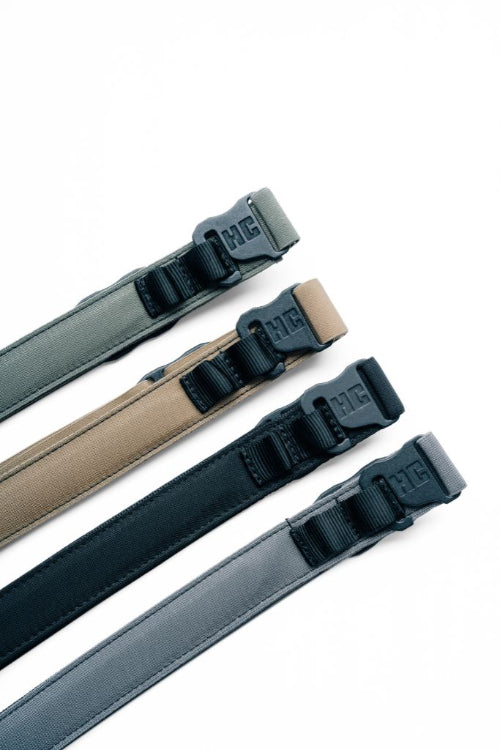
- Nylon concealed carry belt Light, fast-drying, and often more adjustable.
- Hybrid belts Combine a leather outer with a stiff core for stealthy support.
- Choose width
- 1.5 inches The most common size and works with most holsters.
- 1.75 inches More support, but may not fit dress pants loops.
- Decide on the buckle
- Traditional prong Simple, durable, but bigger adjustment steps.
- Ratchet or click track Micro-adjusts in tiny steps for perfect tension.
- Low-profile buckle Helps reduce hot spots at appendix carry.
- Check stiffness
- Medium-stiff Great for micro and compact guns.
- High-stiff Best for larger guns or extra gear.
- Tip Use product specs or reviews to judge rigidity. The belt should not taco under hand pressure.
- Confirm sizing
- Many concealed carry belts run small or large. Follow the maker’s size guide.
- If you appendix carry, consider a size that allows an inch or two of flex.
- Verify holster fit
- Make sure your clips or loops match belt width and thickness.
- D-shaped or contoured belts can change how clips engage. Test at home.
- Mind your lifestyle
- Office wear Choose a leather concealed carry belt with a dress-friendly buckle.
- Active days Choose nylon with micro-adjust for dynamic movement.
Fit, comfort, and printing control
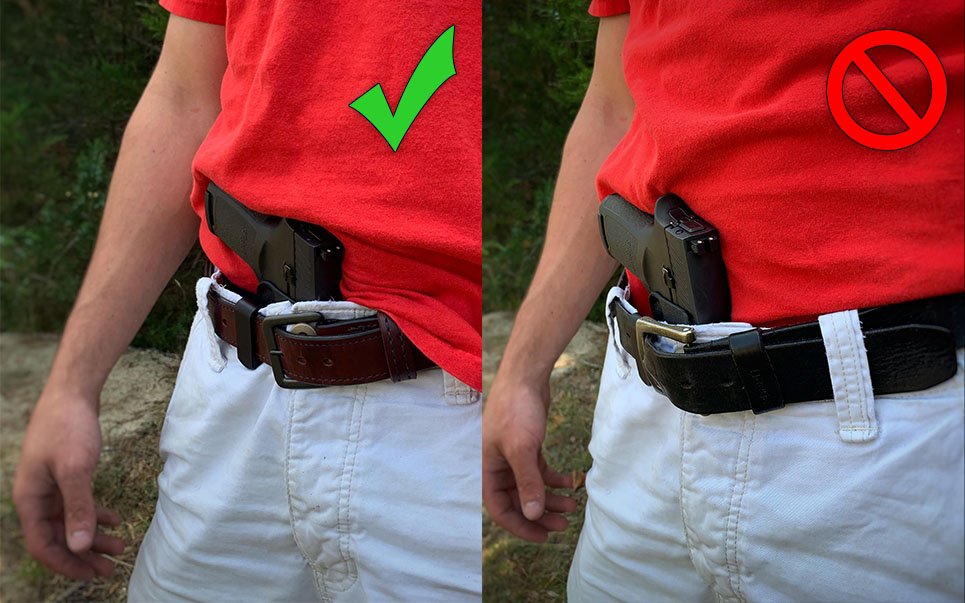
A concealed carry belt should hold the holster close without pain or pinching. Small changes make a big difference.
Tips that work:
- Aim for snug, not tight A ratchet concealed carry belt lets you fine-tune a click at a time.
- Use wedges or claws Your holster’s claw pushes on the belt to tuck the grip in. The belt must be stiff enough to resist that pressure.
- Mind buckle position Move the buckle off-center to avoid pressure at appendix.
- Dress for success Slightly thicker shirts, darker colors, and patterns help hide outlines.
If you feel hot spots, loosen one click, adjust the holster ride height if possible, or shift the holster one belt loop over. Comfort should not come at the cost of stability. Find the sweet spot.
Test your setup at home first
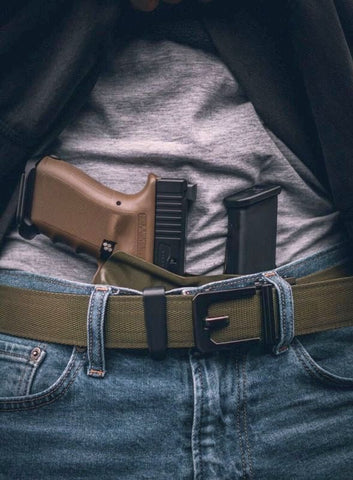
Before you carry, make sure your concealed carry belt and holster work as a team. Always follow the four rules of gun safety.
Try this simple check:
- Verify unloaded Double-check chamber and magazine. Use dummy rounds only if you test retention.
- Fit and hold Put on your concealed carry belt and holster. Do 10 sit-stands and a few deep bends. The holster should not tilt or ride up.
- Retention check With the gun unloaded, invert and gently shake. It should stay seated in the holster.
- Draw practice Safely dry fire. Your belt should not rise or twist during the draw.
- Move and live Walk, drive, tie shoes, pick up a box. Fix any printing or pinch points.
If the holster shifts, add belt tension, adjust holster hardware, or try a stiffer concealed carry belt.
Common mistakes to avoid
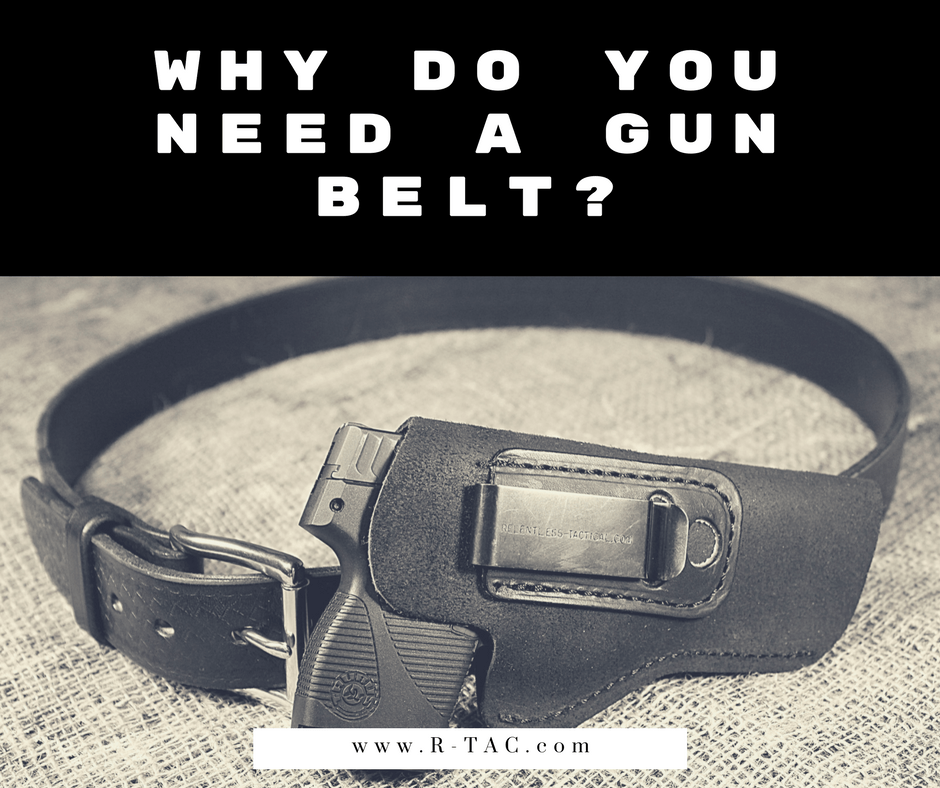
- Using a soft fashion belt It will sag and shift, which hurts safety and concealment.
- Over-tightening to compensate This causes pain and still allows movement.
- Ignoring belt width mismatch Clips that do not match belt width can slip.
- Chasing the stiffest belt only Too stiff can be less comfy with micro guns. Match stiffness to your loadout.
- Skipping periodic checks Belts wear. Inspect for stretch, cracking, or loose stitching.
Avoiding these errors saves money and frustration. A balanced concealed carry belt solves most problems before they start.

Care, lifespan, and budget
A good concealed carry belt can last years with simple care.
Keep it in shape:
- Wipe sweat and grime after use. Salt breaks down fibers and leather.
- For leather, use a light conditioner as directed by the maker.
- Rotate between two belts if you carry daily.
- Inspect the buckle, holes, and stitching every few months.
What to expect on cost and life:
- Nylon concealed carry belt Quality options often range from budget to mid-tier, with long service life.
- Leather concealed carry belt Expect to pay more for reinforced cores. They can last many seasons if cared for.
- Replace if you see delamination, permanent sag, or if tension slips under load.
Frequently Asked Questions: Do You Need a Concealed Carry Belt?
Can I carry with a normal belt?
You can, but it is hit or miss. A normal belt often sags and shifts, while a concealed carry belt keeps the holster stable and secure.
Will a concealed carry belt reduce printing?
Yes. By pulling the holster close and resisting twist, a concealed carry belt helps hide the grip and smooths the outline.
What width works best for most holsters?
For most people, 1.5 inches is the sweet spot. It fits common loops and gives enough support without limiting clothing choices.
Is a nylon or leather concealed carry belt better?
Both work. Choose leather for a dress look and nylon for light weight, quick drying, and micro-adjust options.
Do I need a concealed carry belt for appendix carry?
It helps a lot. Appendix carry depends on tension and angle, and a concealed carry belt holds the holster steady and reduces hotspots.
How tight should a concealed carry belt be?
Snug but not painful. You should be able to breathe and move while the holster stays put during a smooth draw.
Will a concealed carry belt help with a spare magazine?
Yes. The extra weight stays stable, and the belt keeps your mag pouch from rolling or printing.
Conclusion
A stable carry starts with the belt. A quality concealed carry belt gives you better concealment, a steady draw, and more comfort across real days filled with sitting, walking, lifting, and driving. It also lets you carry more confidently, which matters when seconds and safety count.
If you are on the fence, test one for a week with your usual clothes and routine. Feel the difference in support and confidence. Ready to dial in your setup? Choose a concealed carry belt that fits your style, match it to your holster and gun, and share your results or questions in the comments.