Most carriers benefit from chambered carry, but only with training and safe gear.
If you’ve ever asked yourself should you carry with a round in the chamber?, you’re not alone. It’s a high-stakes choice that affects speed, safety, and peace of mind. In this guide, I’ll break down the real trade-offs, share what experienced carriers and trainers teach, and help you reach a clear, confident decision. We’ll look at data, scenarios, and gear so you can decide should you carry with a round in the chamber? based on your needs, not internet noise.
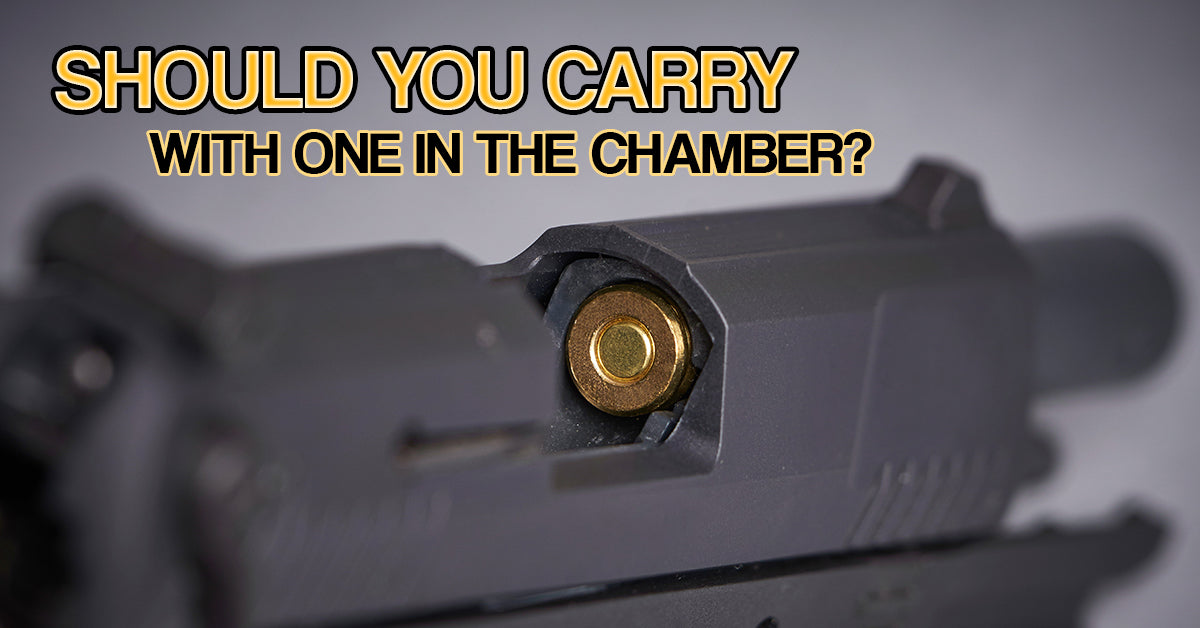
What “a round in the chamber” actually means
A round in the chamber means your defensive handgun is loaded and ready to fire when the trigger is pressed. There is no need to rack the slide under stress. Many call this Condition 1 for certain pistols, or simply “chambered carry.”
The key point is readiness. Your gun is immediately usable if a threat appears at close range. But readiness must live with safety. That balance is where most of the debate happens.
Should you carry with a round in the chamber? It depends on your skill, your holster, your gun’s design, and your daily life. We’ll unpack each part with care.

The straight answer most people want
For many concealed carriers, the practical answer to should you carry with a round in the chamber? is yes, with the right training and equipment. Most defensive encounters are fast and close. Adding the step of racking a slide can eat up time you may not have.
But not everyone is ready on day one. If your draw is shaky, your holster is poor, or your trigger discipline is not consistent, start with training. The goal is safe speed, not just speed.

Benefits of carrying with a round in the chamber
Speed and simplicity are the core benefits. When stress hits, fine motor skills drop. You want fewer steps, not more.
Key advantages:
- Faster first shot when seconds count Close threats often leave little time to react. Chambered carry removes a step.
- One-hand readiness If one hand is injured, busy with a child, or pushing a door, you can still respond.
- Fewer failure points Racking under stress can cause fumbles, short strokes, or malfunctions.
Many trainers point to close-range threat timelines and the “21-foot problem.” In fast approaches, you may have under two seconds. Should you carry with a round in the chamber? If you expect real-world speed, chambered carry stacks the odds in your favor.

Risks, limits, and who should not carry this way
Chambered carry is not for everyone, at least not right away. The main risk is a negligent discharge due to poor handling or a bad holster. Modern pistols are drop-safe, but nothing is trigger-proof.
You might hold off on chambered carry if:
- You lack a quality holster that fully covers the trigger guard.
- Your gun’s trigger is too light for your comfort or experience.
- You have not built consistent draw and reholster habits.
- You feel anxious enough that it affects safe handling.
Should you carry with a round in the chamber? Not until your gear and skills meet a basic safety bar. Confidence should come from practice, not luck.

Safety pillars if you choose to carry chambered
Think of safety as layered armor. Each layer backs up the others.
Core pillars:
- Strict trigger discipline Keep your finger off the trigger until you are on target and ready to fire.
- A rigid holster that covers the trigger guard This prevents contact with the trigger during carry.
- Safe reholstering habits Go slow. Look the gun into the holster. Clear clothing or cords first.
- Regular maintenance Keep your firearm clean, inspect springs, and verify proper function.
- Respect for context Avoid adjusting or unholstering in public unless you must. Reduce handling, reduce risk.
Should you carry with a round in the chamber? Yes, if you follow these pillars every time, not just most of the time.
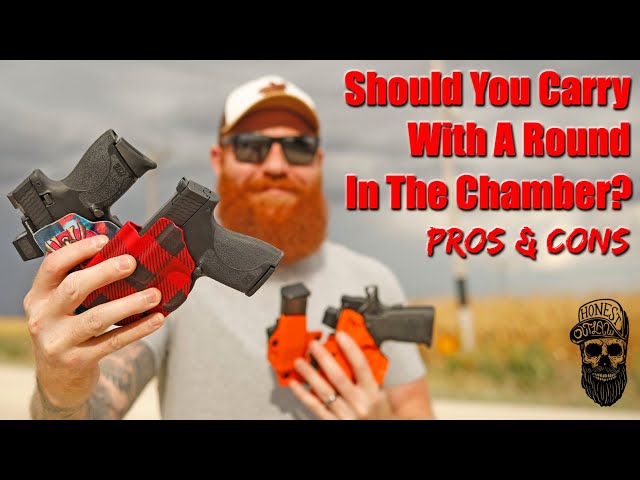
Gear choices that support safe chambered carry
Your setup matters as much as your skill. Good gear forgives small mistakes. Bad gear punishes them.
What to look for:
- Holster design Kydex or properly molded leather, full trigger coverage, solid retention, and a mouth that stays open for safe reholstering.
- Belt A sturdy belt holds the holster in place and keeps angles consistent.
- Pistol features Modern striker-fired pistols with internal safeties are built for chambered carry. Double-action first-shot or manual safeties can add a layer, if trained well.
- Sights and grip You should get a fast, consistent grip and clear sight picture from concealment.
Should you carry with a round in the chamber? Yes, if your gear supports safe, repeatable handling in your daily life.

Legal and ethical factors you must weigh
Laws vary. Know your state and local rules on carry methods, off-limits places, and storage. Some workplaces have policies that affect how and where you carry. Break a policy and you could lose your job or face legal risk.
Ethics matter too. If you carry for defense, you accept the duty to train, store, and handle your gun with care. Should you carry with a round in the chamber? Only if you will live up to that duty, every day.

A practical decision framework
Here’s a clear way to decide without hype.
Ask yourself:
- Can I keep my finger off the trigger under stress?
- Do I own a holster that fully covers the trigger and stays put?
- Can I draw and reholster slowly and cleanly, every time?
- Do I have a plan for kids in the home, off-body carry, or travel?
- Have I practiced safe habits with a coach or trusted partner?
If you answer yes across the board, should you carry with a round in the chamber? Your setup likely supports it. If not, fix the weak links first.
Myths and facts that affect your choice
Let’s clear up common claims so you can think clearly.
- Myth Racking the slide is easy under stress. Fact Stress kills fine motor skills. People fumble. You lose time you may not have.
- Myth Manual safeties make chambered carry “unsafe” or “too slow.” Fact With practice, disengaging a safety is fast and baked into the draw.
- Myth Guns “just go off.” Fact Modern handguns do not fire without a trigger press or catastrophic failure. Most accidents are handling errors.
Should you carry with a round in the chamber? Understanding the real risks—and real safeguards—makes that decision easier.
Realistic scenarios and timing
Picture this. You are holding a toddler with your support hand. A threat closes distance fast. Can you rack the slide and manage your child at the same time? Many cannot.
Or think about tight spaces. An attack in a parking garage or a doorway can trap you. Should you carry with a round in the chamber? If you might need a one-handed response, chambered carry can be the edge that keeps you safe.
Mistakes to avoid and simple habits to build
Avoid these common pitfalls:
- Fishing into the holster Do not reholster blind or fast. Go slow and clear clothing first.
- Cheap holsters Soft or floppy holsters can press the trigger. Choose firm materials.
- Loose cover garments Drawstrings and cords can snag. Keep your setup clean and simple.
- Overconfidence Skipping practice invites errors. Short, regular sessions beat rare marathons.
Strong habits:
- Dry practice with strict safety rules Follow a written routine and use a safe backstop. Verify an unloaded gun each time.
- Consistent carry position Keep the same location to build muscle memory.
- Periodic gear checks Screws, clips, and retention can loosen over time.
Should you carry with a round in the chamber? Yes, when your habits make safety automatic.
Should you carry with a round in the chamber? For beginners, parents, and advanced users
Different lives call for different choices.
- New carriers Start with coaching. Build a safe draw. When consistent, move to chambered carry if your comfort and gear are ready.
- Parents Focus on holsters with strong retention and safe storage at home. Reduce handling around kids.
- Advanced users Maintain standards. Add stress to practice with timers and movement, but keep safety first.
Across all groups, the core question remains should you carry with a round in the chamber? Your answer should match your skills, gear, home life, and local laws.
Frequently Asked Questions of should you carry with a round in the chamber?
Is it safe to carry with a round in the chamber?
Yes, with proper training and a good holster that covers the trigger. Most modern pistols have internal safeties that prevent firing without a trigger press.
Does carrying chambered increase the chance of an accident?
Accidents usually come from handling errors, not from the gun being chambered. Good gear and strict trigger discipline reduce that risk.
What if my pistol has a manual safety?
Manual safeties can add a layer of protection if trained well. Practice disengaging during the draw so it becomes automatic.
Is “Israeli carry” or Condition 3 a good idea?
It can work for some, but it adds time and complexity. Under stress, racking the slide can be hard, especially with one hand.
What holster is best for chambered carry?
Use a rigid holster that fully covers the trigger, keeps its shape, and holds the gun securely. Pair it with a solid belt for stability.
Conclusion
Should you carry with a round in the chamber? For many, the answer is yes—if your training, mindset, and gear earn that trust. Chambered carry gives speed, simplicity, and one-hand readiness, but only when balanced by solid safety habits.
Make your choice with care. Audit your skills, upgrade weak gear, and commit to regular, safe practice. If this guide helped you clarify should you carry with a round in the chamber?, share it with a friend, subscribe for more training insights, or leave a question so we can help you carry with confidence.